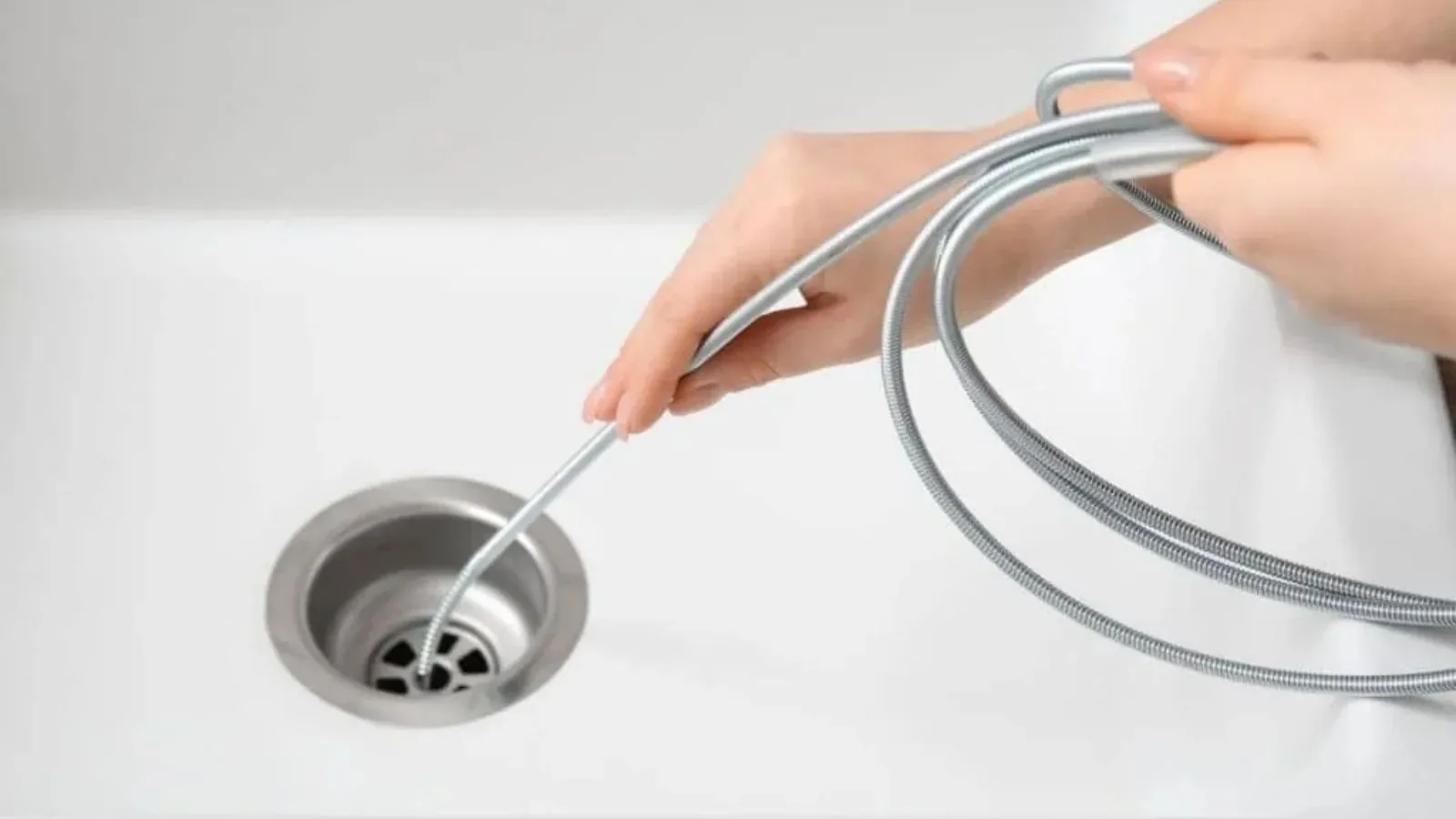
You have plunged, poured and prayed, and the sink still drains slowly. No visible clog. The water gets away in its own time.
This is common, and the cause is usually one of four things: the stopper, the trap, the vent or the branch line. This guide goes through them in order.
If other fixtures are slow too, skip to the last section.
Four Causes To Check In Order
| Check | How | What it means |
|---|---|---|
| Pop-up stopper | Lift it out or unscrew the rod behind the faucet | Hair and soap often wrap the pivot |
| P-trap | Place a bucket and loosen the slip nuts | Debris sits in the curve |
| Vent | Listen for gurgling, check the roof if safe | A blocked vent slows draining |
| Branch line | Run the tub or toilet and watch the sink | A shared line is partly blocked |
The Stopper And The Trap
The stopper mechanism is the culprit more often than people expect. A gunky pivot rod can hold the stopper half-closed, and water squeezes around it. Pull it, clean it and reseat it.
If the stopper is clean, put a bucket under the trap, loosen the slip nuts and clear it. Refit the washers and test for drips. If you do not feel comfortable, call a plumber for a quick visit. See faucet and sink repair.
Want a plumber on the way? The line is open all day and all night.
☎ Call (732) 466-1098The Vent: The Hidden Cause
Drains need air behind the water to flow. A vent stack that is clogged by leaves, a bird nest or ice makes water drain slowly and gurgle. A plumber can check the vent with a camera or from the roof.
If other sinks in the house gurgle too, the vent is a likely suspect. If the vent is fine and the main line is slow, see drain cleaning.
Scale And Mineral Buildup In This Water
North Brunswick's water utility reported hardness of 67.5 ppm as calcium carbonate in its 2022 report, about 3.9 grains per gallon. That is moderately hard, and it leaves mineral crust on faucet aerators and stopper hardware over time.
A faucet that sputters or a stopper that sticks can be a scale problem. Soak the aerator in vinegar and wipe the stopper hardware. If scale returns quickly, a water treatment option may be worth discussing.
A Ten Minute Stopper Cleaning, Step By Step
- 1Lift or unscrew the stopper
Many pop up when you pinch the rod nut behind the faucet and pull the pivot rod out.
- 2Pull out the gunk
Hair and soap wrap around the stopper end. A bent wire or an old toothbrush helps.
- 3Rinse and reseat
Run hot water, replace the stopper and test.
- 4Watch the flow
If the sink still stands, move to the trap.
Done right, this fixes the majority of slow bathroom sinks.
Overflow Holes And Smells
The overflow hole near the top of the basin leads into the drain too. Gunk collects behind it and causes odors. A bottle brush and a little soap clear it.
A smell that returns after cleaning can mean a dry trap or a vent issue. Run water in rarely used sinks, and if the smell remains, have a plumber check the vent.
Pop-Up Versus Open Drains
Pop-up stoppers trap hair and need cleaning more often than open drains. If you have a pop-up you never use, replacing it with an open grid strainer removes the problem. Look for a strainer that catches hair but still lets water through freely.
If you replace hardware, match the finish and the drain size. A plumber can swap one in minutes during a visit for something else.
Hot Water, Baking Soda And Other Home Remedies
Hot water softens soap. A kettle poured slowly down a bathroom sink can move a light film. Baking soda and vinegar fizz and freshen, but they do little against a hair mat.
Treat these as maintenance, not a cure. Mechanical removal of hair at the stopper and trap is what actually restores flow. Keep a small drain tool in the bathroom closet and use it monthly, and most slow sinks never get that far.
New Jersey follows the National Standard Plumbing Code Illustrated, 2021 edition, whose trap and vent rules are the reason a blocked vent can slow a sink that has no clog.
When The Problem Is Bigger
If the tub and toilet are slow too, the branch or main line may be blocked. If you smell sewage, sewage is already backing up. Call the 24/7 line and see sewer line cleaning.
We serve North Brunswick, Milltown and South Brunswick.
Local questions answered
The stopper pivot, a partial trap clog or a vent problem are the usual reasons.
Yes. Without air, water cannot flow smoothly and the trap may gurgle.
Hardness leaves scale on aerators and stoppers. North Brunswick's water is moderately hard at about 3.9 grains per gallon.
We advise against it. It is hazardous and often does not clear the cause.
If cleaning the stopper and trap does not help or other fixtures are slow too.
Ready to talk to a plumber? The line is open all day and all night.
☎ Call (732) 466-1098