If water is showing up where it should not be, call for emergency leak detection in North Brunswick, NJ. Our 24/7 line is open at night, and we offer same-day appointments when available.
Shut off the main water valve if you hear running water, see a stain growing on a ceiling or find a wet floor. The main shut-off sits near the meter or where the line enters the house. Turn off power to any soaked area only if you can reach the breaker safely.
Finding the leak is half the job. Once located, we fix it ourselves or hand off to burst pipe repair, water line repair or sewer line repair as needed.
Signs Of A Hidden Leak
Call us if you notice
- A water bill that jumped without any change in how you live.
- A meter that keeps spinning when every fixture is off.
- A stain, bubble or peeling paint on a ceiling or wall.
- A warm patch on a floor, which can point to a hot water line under the slab.
- A musty smell, mold spots or warped baseboards.
- The sound of running water when everything is off.
A leak does not always show itself. Water can travel along a joist or inside a wall before it reaches a place you can see.
The Meter Test You Can Do Now
- 1Shut everything off
Turn off all taps and appliances, including the ice maker and irrigation.
- 2Read the meter
Note the numbers or watch the small leak indicator dial.
- 3Wait an hour
Do not use any water.
- 4Read it again
If the number moved or the dial turned, water is going somewhere.
Tell us what you saw. If the meter moves with the house valve closed, the leak is probably in the line from the street. If it stops, the leak is inside the house.
Spinning meter or a wet ceiling? Call the 24/7 line now.
☎ Call (732) 466-1098How We Find It Without Opening Walls
| Method | What it finds | Good for |
|---|---|---|
| Pressure test | Whether a line holds pressure | Supply lines and hot water loops |
| Acoustic listening | The sound of water escaping a pipe | Slab and buried lines |
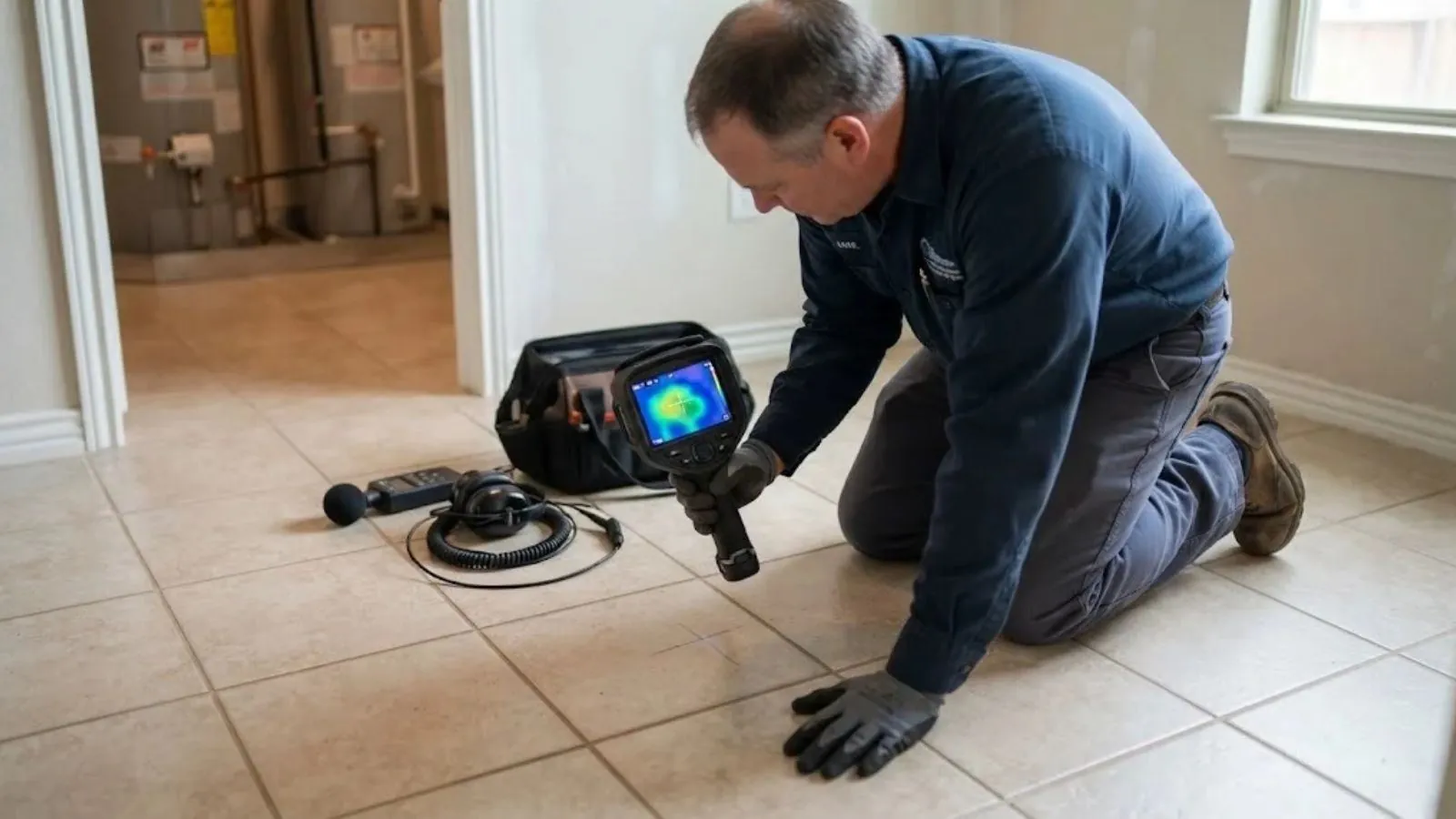
| Thermal imaging | Temperature differences from wet material | Walls, ceilings and radiant lines |
| Moisture meter | Damp drywall, wood and subfloor | Confirming the extent of damage |
| Camera | Cracks inside drain lines | Drain and sewer leaks |
We choose the method based on the symptom. A bill spike and a spinning meter ask for a different tool from a ceiling stain under a bathroom.
After We Find It: Repair, Drying And Insurance
Finding the leak is step one. Step two is repair, and step three is drying out anything that got wet. Drywall and insulation that stay damp for more than a couple of days can grow mold, so call a restoration company if the area is large.
Photograph the damage and keep the failed pipe section if you can. Call your insurer early, because many policies have notice requirements. We give you a written description of what we found and where, which helps with a claim.
Preventing The Next Leak
Water pressure above a safe range stresses every joint in the house. A cheap gauge on an outdoor spigot tells you your pressure. If it is high, a pressure regulator is a modest fix that protects fixtures and the water heater.
Replace old rubber washing machine hoses with braided ones, and check them yearly. Know where your main shut-off is, and test the valve so it turns when you need it. Those three habits stop a surprising number of emergencies.
Slab Leaks, Wall Leaks And Buried Lines
A slab leak is a break in a pipe under a concrete floor. Signs include a warm spot on the floor, a constant hiss and a rising bill. Acoustic equipment listens at the floor and traces the pipe. Repair options range from a spot dig to rerouting the line overhead.
A leak inside a wall or ceiling is often a small pinhole in copper or a failed joint. We use thermal imaging to keep the opening small. If the leak is on the buried line from the street, see water line repair for how those jobs run.
Irrigation lines and crawlspace pipes are checked too. Tell us where you suspect the problem.
Why High Bills Matter In North Brunswick
North Brunswick's water and sewer office at the municipal building on Hermann Road handles billing questions, and a sudden jump is worth raising with them as well as with a plumber. A leaking toilet flapper can waste a lot of water without making any noise.
Check toilets with a few drops of food coloring in the tank. If color shows in the bowl without flushing, the flapper is leaking. See toilet repair for the fix. According to the township's 2022 water quality report, the highest annual chlorine average was 2.40 ppm against a limit of 4.0, which describes water at the treatment plant and says nothing about the pipes inside your walls.
What Affects The Cost Of Leak Detection
Location of the leak
A wall pinhole costs less to open than a leak under a slab.
Equipment needed
Acoustic, thermal and camera work take different time.
Size of the property
A larger house has more pipe to trace.
Access
A finished basement ceiling or a tight crawlspace slows the work.
Repair after detection
Finding the leak and fixing it are separate line items, and you decide on the second.
Insurance, honestly
Many homeowners policies cover the water damage from a sudden leak but not the cost of finding or repairing the pipe itself. Some policies exclude slow leaks. Ask your insurer, and keep photos and bills.
Need the leak found? Call and describe what you see, and we will explain the price before the visit.
☎ Call (732) 466-1098Frequently asked questions
Yes. The 24/7 line is open all night, every weekend and on holidays. We arrange a plumber and offer same-day appointments when available.
Watch the water meter with every fixture off. If it moves, water is escaping. A stain, warm floor spot or musty smell are other clues.
Usually no. We locate the leak first with listening gear and thermal imaging so any opening is small and in the right place.
The meter test helps. If the meter spins with the house valve closed, the leak is on the line between the meter and the house, which is generally the owner's side. Ask the township water office where responsibility ends.
It is a leak in a pipe running under a concrete slab floor. Signs include a warm floor patch, a hissing sound and a bill increase.
Yes. A worn flapper can leak into the bowl without sound. A few drops of food coloring in the tank will show it.
Policies differ. Many cover resulting water damage from a sudden leak but not the pipe repair. Ask your insurer and keep records.