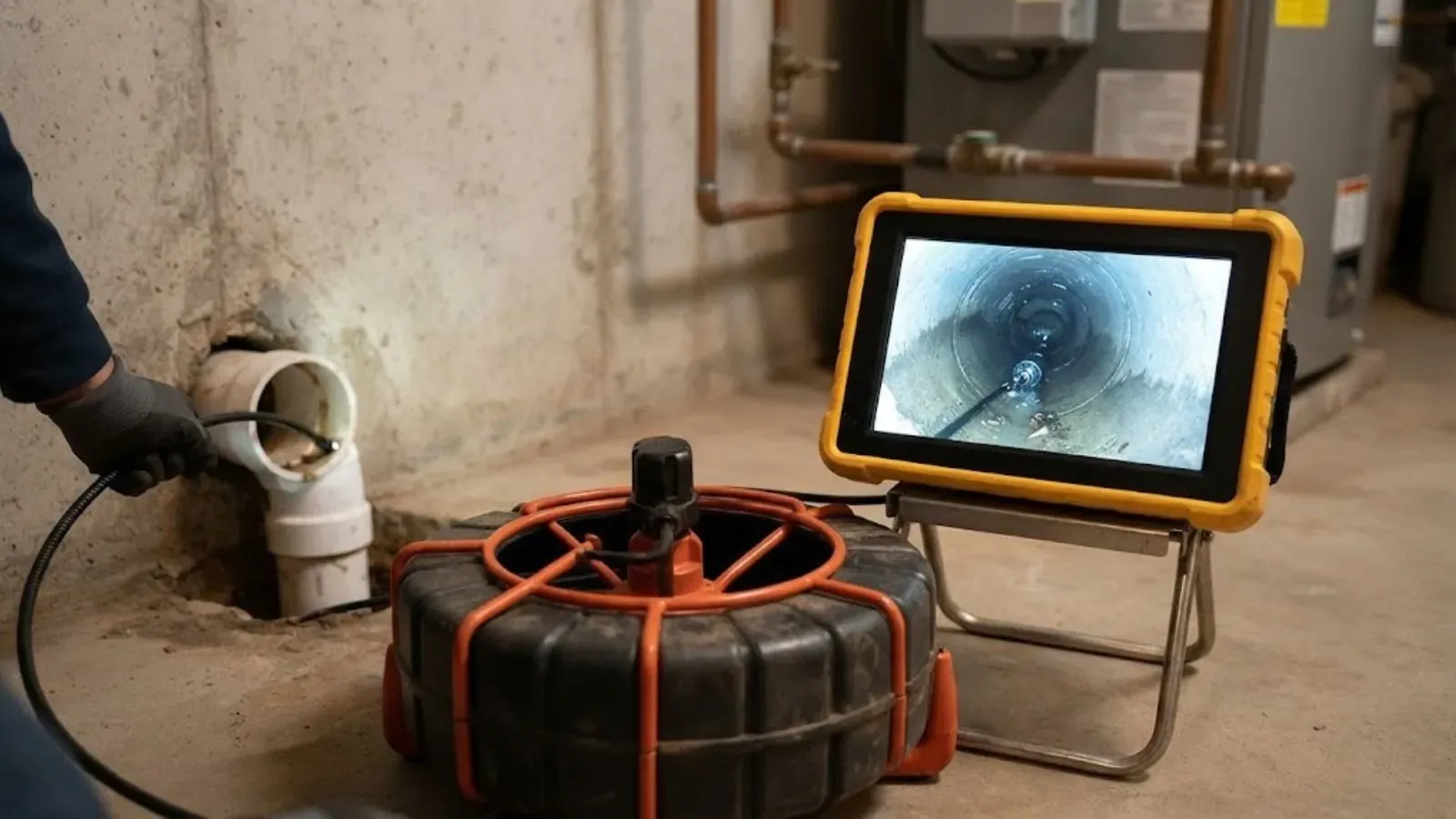
A sewer camera inspection in North Brunswick, NJ turns guesswork into evidence. It tells you whether a clog was a one-time event or a symptom of pipe damage, and it is a smart step before buying an older home.
Our plumbers feed the camera through a cleanout or a pulled toilet, record the run and mark where problems sit. If the pipe is dirty, sewer line cleaning or hydro jetting comes next. If the pipe is damaged, we talk through sewer line repair.
Inspections are scheduled visits. If a backup is happening right now, call the 24/7 line and we will clear it first, then camera the line.
What The Camera Finds
A camera sees what a cable cannot. Typical findings include roots entering at joints, cracks along the crown of the pipe, bellies that hold water, offset joints, fat and scale buildup, and sections that have collapsed.
We pause on each problem, note its distance from the cleanout and explain what it means. A belly that holds an inch of water is a different story from a pipe that is half-collapsed.
When To Schedule One
Good reasons for a camera inspection
- You are buying an older house and want to know what the lateral looks like before closing.
- The main line has backed up more than once.
- A cable keeps catching at the same depth.
- You see a sinkhole, soft patch or unusual greening of the yard.
- You are planning a basement bathroom or other work that adds load to the line.
Planning to buy an older home? Ask us about a sewer camera inspection.
☎ Call (732) 466-1098What The Inspection Includes
- 1Access
We locate a cleanout or open a toilet to get the camera into the pipe.
- 2Run the line
The camera moves toward the street while we record footage.
- 3Mark and note
Problems are noted with their distance and approximate depth.
- 4Review together
We review the footage with you and recommend, or rule out, any repair.
Ask for a copy of the footage. If a repair is recommended, you can use it to compare quotes or show it to your insurer.
Reading The Results
| On camera | Meaning | Typical next step |
|---|---|---|
| Light scale or grease | Pipe is sound but dirty | Cleaning or jetting |
| Roots at a joint | Moisture is entering the joint | Cutting, then monitor or line the pipe |
| Belly with standing water | Pipe has sagged | Monitor, or repair if clogs recur |
| Cracked or broken section | Structural failure | Spot repair, lining or replacement |
| Collapsed pipe | Flow blocked by deformation | Excavation and replacement |
Buying Or Selling An Older Home
Many older houses around Route 1, Route 130 and Livingston Avenue were built long before plastic pipe was common. A lateral from that era might be clay, cast iron or fiber pipe, and any of them can hide trouble.
A camera inspection before closing costs little compared with a surprise repair. Share the footage with your agent or attorney, and remember that a seller can often credit repair costs when the footage shows damage. An inspection follows the same plumbing subcode, the National Standard Plumbing Code Illustrated, 2021 edition, that governs any repair that comes after it.
What Affects The Price Of An Inspection
Length of run
A short run to a nearby street costs less time than a long lateral.
Access
A cleanout makes it faster. Pulling a toilet takes more time.
Pipe cleaning first
Heavy buildup may need cleaning before the camera can see the wall.
Locating
Marking depth and position adds a locating step.
Footage delivery
A recording you can keep is part of the visit.
Insurance, honestly
An inspection by itself is rarely covered. If it documents damage that your policy covers, the footage can support a claim. Ask your insurer first.
Want a camera on your sewer line? Call us and we will schedule the visit and explain the price up front.
☎ Call (732) 466-1098Frequently asked questions
Usually under an hour for a typical lateral, though a long run or heavy buildup takes longer.
Yes. Ask for the footage when you book, and we will include it with the visit.
Often yes. We can feed the camera through a toilet opening or roof vent. We can also show you where to add a cleanout.
For an older home, yes. It can find root damage, bellies and cracks that a home inspector cannot see.
We clear the blockage first, then re-run the camera. If it still cannot pass, that is a finding in itself.