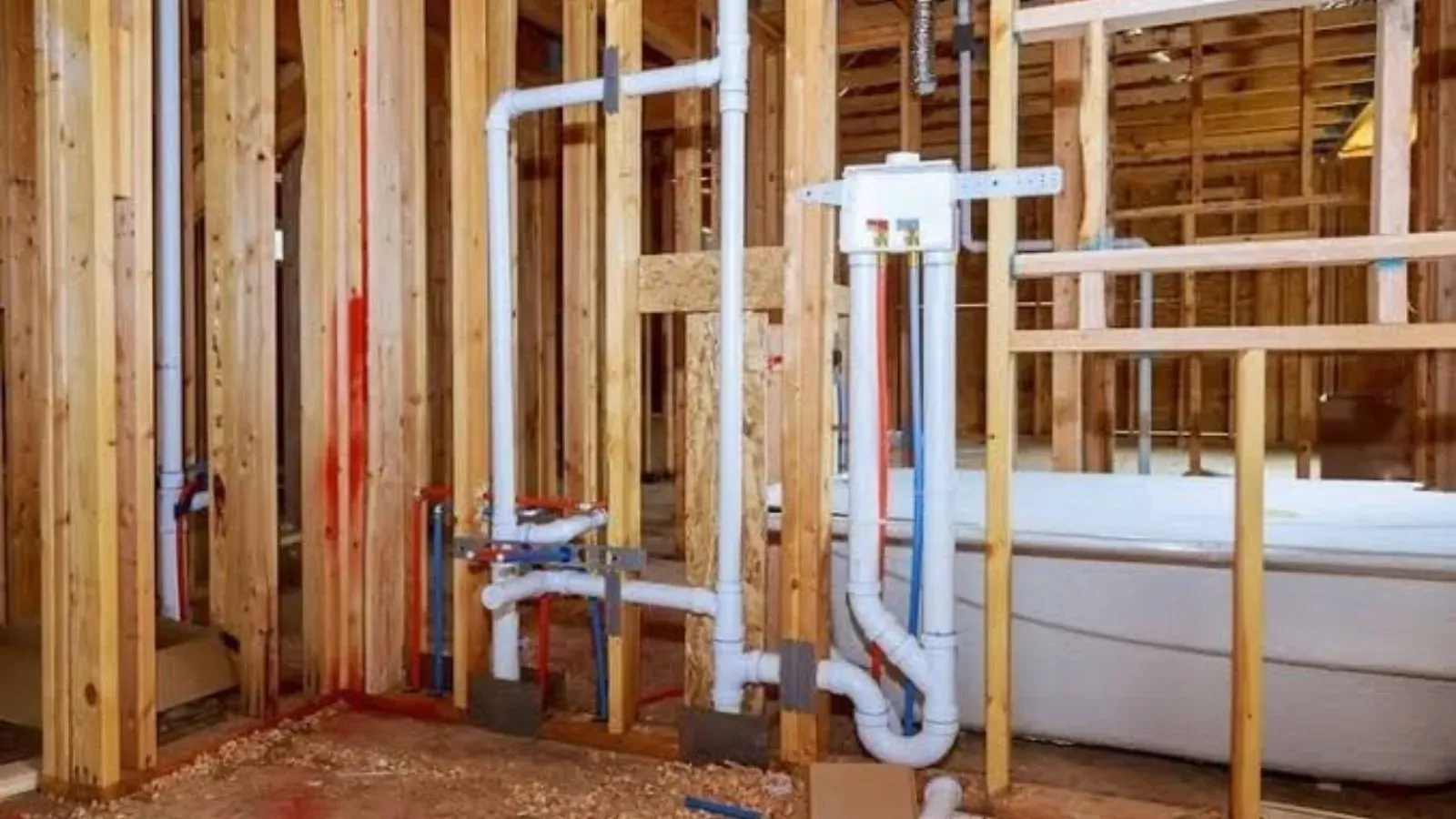
A bathtub has three plumbing systems: the supply that fills it, the drain that empties it and the vent that lets the drain breathe. Each follows a code, and the order of work matters.
This guide explains how a tub is plumbed so you can plan a remodel, read a quote and ask good questions.
Plumbing work in New Jersey must be done by a licensed professional, and permits and inspections apply to new installs.
The Three Systems
| System | Parts | What it does |
|---|---|---|
| Supply | Hot and cold lines, valve, spout | Brings water to the tub |
| Drain | Shoe, overflow, tailpiece, P-trap | Takes water away and blocks sewer gas |
| Vent | Pipe tied to the main vent stack | Lets air in so the trap does not siphon |
A tub drain is usually 1.5 inches in diameter and must slope toward the main drain. The trap sits below the floor, so access from below or through a panel is important.
Order Of Work
- 1Frame and set height
Locate the tub, drain and valve before walls close.
- 2Rough-in drain and vent
Set the trap, connect it to the branch drain and tie in the vent.
- 3Rough-in supply
Run hot and cold lines to the valve location, with stops where the code requires.
- 4Pressure and leak test
Test supply lines and fill the drain with water before the walls close.
- 5Set the tub and finish
Install the tub, connect the overflow, seal and then finish the wall and trim.
Testing before closing the wall is the step most often skipped, and the one that saves the most money. Our plumbing installation page describes how we approach it.
Want a plumber on the way? The line is open all day and all night.
☎ Call (732) 466-1098Valves, Anti-Scald And Pressure
A modern tub valve balances hot and cold pressure so the water does not spike when someone flushes a toilet. Local code often requires this protection. Ask your plumber which valve fits your fixture.
A water heater set too high raises scald risk. Many plumbers recommend a setting that balances comfort with safety. See water heater installation for related details.
Licensing And Code In New Jersey
New Jersey law, N.J.S.A. 45:14C-1, says plumbing work is done by a master plumber or an authorized plumbing contractor. Licensees must display their plumbing license number on vehicles, invoices and advertising.
The plumbing subcode adopted by the state is the National Standard Plumbing Code Illustrated, 2021 edition. Ask the North Brunswick building department what permit and inspection your tub project needs. The township counted 15,789 housing units in 2020, many with older tubs ready for replacement.
Choosing A Tub And Matching The Rough-In
Tub sizes, drain positions and overflow styles vary. A left-hand drain tub in a right-hand alcove will not line up. Measure the alcove, check the drain position in the spec sheet and match the valve height to the wall tile.
Cast iron and steel tubs are heavy and need a solid floor. Acrylic tubs flex and need full support underneath. A mortar or foam bed under an acrylic tub keeps it from creaking and cracking.
Access Panels And Why They Matter
Leave an access panel to the valve and, if you can, to the trap. Water supply valves wear out, and a plumber working through a hole in the ceiling below costs more than one working through a panel.
A neat panel in the wall behind the tub or in the adjoining room stays hidden under paint and saves a wall later.
Testing Before You Close The Wall
Fill the tub and let it drain while you watch the trap and the pipes below. Run the valve with the spout off to check for leaks at the connections. Leave the supply lines pressurized for a while and watch the gauge.
A test costs minutes. A leak behind tile costs a wall. This is the single best habit for any plumbing project.
Common Remodel Surprises
Opening a bathroom wall often reveals old galvanized supply, a notched joist or a drain with the wrong slope. Plan time and budget for one surprise.
A plumber who has seen many tubs spots the problem on the first walk-through and tells you what to expect.
Common Problems After A Tub Install
A slow drain usually means the trap or tailpiece has hair or a poor slope. A gurgle means the vent is not doing its job. A stain on the ceiling below the tub points to a leak at the overflow gasket or the drain shoe. See leak detection if you cannot find it.
We serve North Brunswick, South Brunswick and Edison for these jobs.
Local questions answered
State law says plumbing work is done by a licensed master plumber or authorized contractor. Ask the building department about any homeowner rules before you start.
The trap, tailpiece or slope may be wrong, or hair is trapping soap. A plumber can check.
Usually 1.5 inches. A plumber confirms the size for your fixture and branch.
Yes. A vent lets air in so the water leaves smoothly and the trap holds.
New installs generally do. Ask the building department.
Ready to talk to a plumber? The line is open all day and all night.
☎ Call (732) 466-1098